

VAT for Kenyan SMEs: Registration, Input Credits, and the Cash-Flow Trap

Relationship Manager & Founder of Bengula Inc.
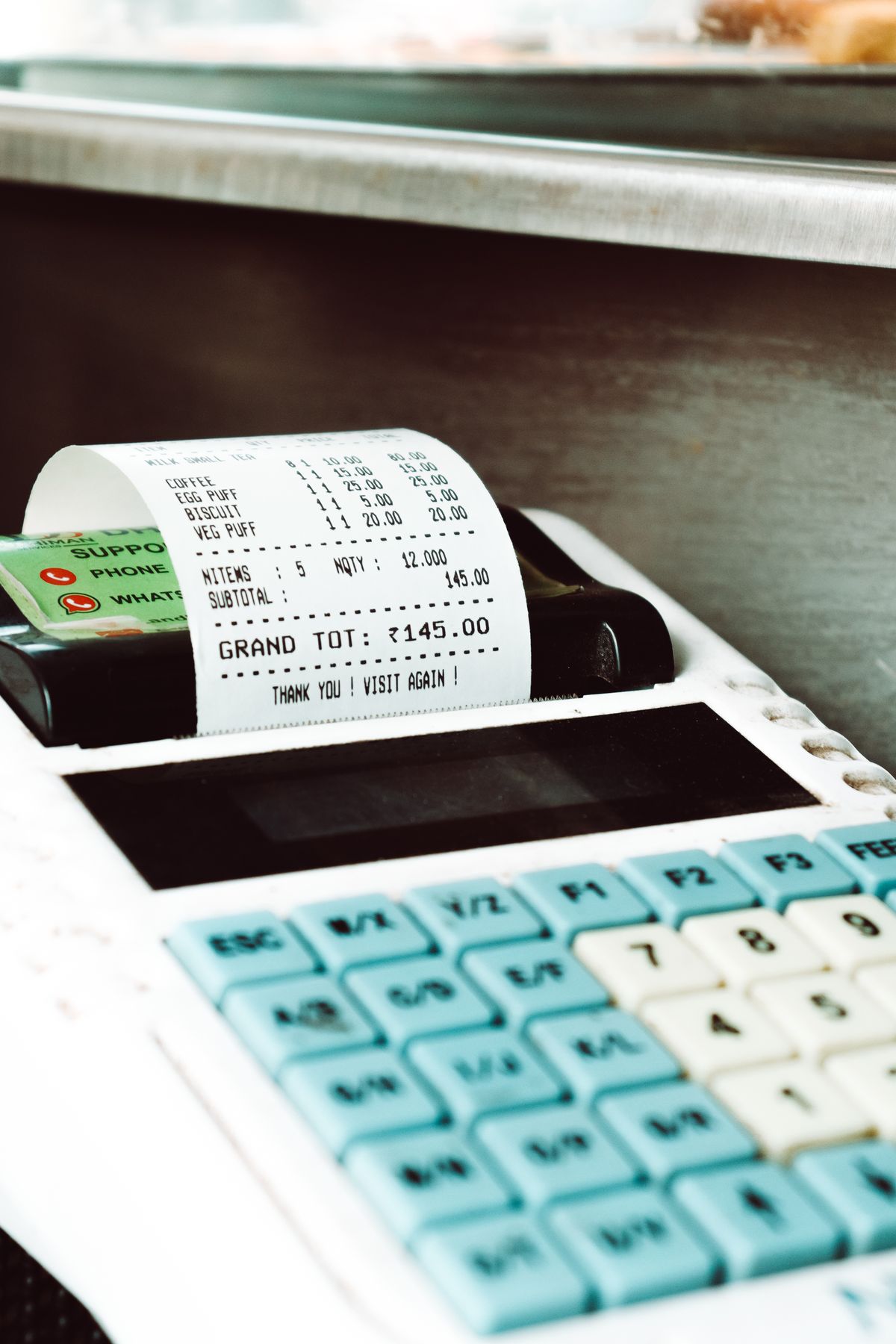
The day a Kenyan business crosses the VAT registration threshold, it acquires a second job it did not apply for: unpaid tax collector. From that point on, 16% of nearly every invoice it issues belongs to the Kenya Revenue Authority, sits in the business bank account looking exactly like the rest of the money, and must be handed over by the 20th of the following month whether or not the customer has paid.
That last clause is where businesses die. Not in the filing, which is a twenty-minute job on iTax, and not in the rate, which is fixed and knowable. In the gap between when VAT becomes payable and when the cash that funds it actually arrives. A contractor who invoices KES 11.6 million on 5 January on 60-day terms owes KRA the VAT on that invoice on 20 February and will not see a shilling of the underlying payment until March. Nobody did anything wrong. The business simply financed the government for three weeks, out of working capital it did not know it was committing.
Every generic guide to Kenyan VAT explains the rate, the threshold and the deadline. This one treats VAT as what it is for a growing SME: a working-capital event with a fixed calendar, sitting alongside the debtor days and inventory cycles covered in the working capital cycle and forecastable in exactly the same way as any other outflow in the 13-week cash forecast.
Key Insight: VAT collected is not revenue and it is not yours. It is a liability from the moment you invoice it, and the single most destructive habit in Kenyan SME finance is treating a VAT-inclusive receipt as though the whole amount were income. A business that banks KES 1,160,000 and mentally records KES 1,160,000 of turnover has already spent KES 160,000 of somebody else's money and will discover it on the 20th.
Sixteen per cent is not yours
Split it on receipt. The VAT inside a gross amount is the gross times sixteen over one hundred and sixteen. Move it out of the operating account the day it lands.
The 20th does not wait for your debtors
VAT falls due on invoices issued, not invoices collected. If your customers pay at 45 days, you fund the tax before you fund anything else.
Exempt is not zero-rated
Zero-rated means you charge nothing and reclaim everything. Exempt means you charge nothing and reclaim nothing, so the VAT on your purchases becomes a permanent cost.
Part 1: The Mechanism, in One Line
VAT is a tax on consumption, collected in stages along the supply chain. Each registered business charges VAT on what it sells (output tax), reclaims VAT on what it buys (input tax), and remits the difference.
The standard rate is 16%. Fuel carries a special rate of 8%. Certain supplies are zero-rated at 0%, and others are exempt, which is a different thing entirely and the subject of Part 4.
Because you reclaim what you paid, VAT is not a cost to a registered business in the ordinary case. It is a flow. Money arrives from customers with tax attached, money leaves to suppliers with tax attached, and the net goes to KRA every month. The trap is that the flow has a rhythm, and the rhythm does not match your own.
One arithmetic point that pays for itself immediately. When somebody quotes you a VAT-inclusive figure, the tax inside it is not 16% of that figure:
KES 1,160,000 gross contains KES 160,000 of VAT, which is 13.79% of the gross, not 16%. Businesses that apply 16% to a gross figure understate their liability by roughly a sixth every time, and the error compounds silently until a reconciliation finds it.
Part 2: The Registration Decision
Registration is compulsory for any person making, or expecting to make, taxable supplies of KES 5 million or more in any twelve-month period (KRA, current as at August 2026). Below that, registration is voluntary. Non-resident suppliers of digital services face no threshold at all.
Two practical warnings about the threshold itself.
It is rolling, not annual. "Any twelve-month period" means the test runs continuously, not against your financial year. A business that does KES 2 million in the last quarter and KES 3.2 million in the first quarter of the next year has crossed the line, whatever the accounts say in December.
It is forward-looking. Expecting to exceed the threshold triggers the obligation. Winning a single contract that takes you past KES 5 million creates the duty to register before the money arrives, not after.
When Voluntary Registration Pays
The decision is not about size. It is about who your customers are and how much input VAT you carry.
| Your customers | Your input VAT | Verdict |
|---|---|---|
| VAT-registered businesses | High (goods, imports, equipment) | Register. Your customers reclaim the VAT you charge, so your effective price is unchanged, and you convert input VAT from a cost into a credit |
| VAT-registered businesses | Low (mostly labour) | Marginal. Registration is neutral on price and gains you little; the admin is the cost |
| Consumers or unregistered traders | High | Difficult. You gain the input credit but must either raise prices 16% or absorb it |
| Consumers or unregistered traders | Low | Stay out while you legitimately can. Registration is a straight 16% competitiveness loss |
The mechanism behind the top row is worth spelling out because it is the strongest argument for voluntary registration and it is rarely made. Suppose you buy KES 1,000,000 of stock plus KES 160,000 VAT. Unregistered, your cost is KES 1,160,000, full stop. Registered, your cost is KES 1,000,000 and the KES 160,000 is reclaimable. If your customers are themselves registered businesses, the 16% you now add to your invoice costs them nothing, because they reclaim it too. You have improved your margin by KES 160,000 on that purchase without changing your price to anyone.
The bottom row is the mirror. A salon, a kiosk, a small restaurant selling to individuals cannot pass VAT on without either losing customers or cutting margin, and has almost no input VAT to reclaim. For those businesses registration is a genuine loss, which is exactly why the threshold exists.
A related regime question, whether a small business should sit under turnover tax or the normal corporation tax regime, turns on net margin rather than revenue and is a separate, independent decision from VAT. A business can be on turnover tax and VAT-registered at the same time, and many are, because the turnover tax band starts at KES 1 million while VAT bites at KES 5 million. That choice is worked in turnover tax vs corporation tax.
Part 3: The Cash-Flow Trap, Worked
Here is the mechanism that closes businesses.
The contract. A supplier wins a KES 10,000,000 order from a corporate buyer, invoiced on 5 January, payment terms 60 days.
| Line | Amount (KES) |
|---|---|
| Invoice value | 10,000,000 |
| VAT at 16% | 1,600,000 |
| Total invoiced | 11,600,000 |
The costs. To deliver, the supplier buys inputs of KES 3,750,000 plus KES 600,000 VAT, paid in cash during January because suppliers do not extend credit on that size.
The January VAT return, due 20 February:
The calendar:
flowchart LR
  A["5 Jan: invoice 11.6M issued"] --> B["Jan: pay 4.35M for inputs"]
  B --> C["20 Feb: remit 1.0M VAT to KRA"]
  C --> D["6 Mar: customer finally pays 11.6M"]
On 20 February this business must find KES 1,000,000 of its own money. It has already spent KES 4,350,000 on inputs. It has received nothing. The customer pays fourteen days later.
That KES 1,000,000 is not a cost, and it is not a loss. The business will be made whole in March. But for those fourteen days it is a real, unavoidable funding requirement created purely by the timing of tax, and if it is not planned for it will be met from an overdraft, from a delayed supplier payment, or not at all.
Three things make this worse than the single example suggests:
Growth amplifies it. A business growing 30% a year is remitting VAT on an ever-larger invoice book while its debtor balance grows at the same rate. The VAT gap grows with the business, permanently, which is one of the several reasons profitable growth consumes cash.
Bad debts still owe tax. If that customer never pays, the business has still remitted the VAT. Relief exists, but it is slow: under the current position the bad-debt refund provision runs on a three-year window from the date of supply, unless the debtor formally enters statutory management, receivership or liquidation earlier. (The Finance Act 2026 restored the three-year period with effect from 1 July 2026, reversing a shorter window introduced the previous year. Confirm the current provision with KRA or your tax agent before relying on it.) Three years is not cash-flow relief. It is a footnote.
The recurring version is quieter but larger. A trader doing KES 3,000,000 of monthly sales with KES 1,800,000 of vatable purchases remits about KES 192,000 a month, roughly KES 2.3 million a year passing through the business account that was never income for a single day. Businesses that treat their bank balance as a performance indicator systematically overestimate themselves by that amount.
Part 4: Zero-Rated Versus Exempt
These two sound like synonyms and are close to opposites. Getting them wrong changes your pricing, your margin, and whether KRA owes you money or you have quietly absorbed a cost.
| Zero-rated (0%) | Exempt | |
|---|---|---|
| VAT charged to your customer | 0% | None |
| Input VAT on your purchases | Fully recoverable, and refundable if it exceeds output tax | Not recoverable. It becomes part of your cost |
| Net position | KRA can end up paying you | You silently carry the VAT your suppliers charged |
| Typical examples | Exports of goods, and certain services and supplies listed in the VAT Act's Second Schedule | Financial services, insurance, education, medical services, unprocessed agricultural produce, residential rent |
Worked, on a business with KES 1,000,000 of vatable purchases carrying KES 160,000 of input VAT:
- Zero-rated (an exporter): charges 0% on the export sale, reclaims the full KES 160,000 from KRA. True input cost: KES 1,000,000.
- Exempt (say a training institution): charges nothing on its fees, reclaims nothing. True input cost: KES 1,160,000.
The exempt business is 16% worse off on every vatable input it buys, permanently, and it is invisible in the accounts because it never appears as a tax line. It just shows up as higher costs.
Two consequences that matter commercially. First, exporters should be VAT-registered, because zero-rating turns input VAT into a refund rather than a cost, which is a direct margin improvement on every consignment. Second, businesses making a mix of taxable and exempt supplies must apportion their input tax, and the rules for doing so have moved recently (the older 90:10 apportionment formula was removed in 2024). Mixed suppliers should take that specific point to a tax agent rather than a blog.
Also worth flagging for 2026: the financial services exemption was narrowed, bringing digital payment processing, merchant acquiring and payment gateway services into the 16% net. If you sell through a payment gateway, your cost of collection has changed, and if you are VAT-registered that VAT is reclaimable, which is one more small argument for registration.
Part 5: The Input Credit Rules That Cost Money
Input tax is not automatic. Three rules quietly destroy claims.
The six-month window. Input tax is deductible only within six months after the end of the tax period in which the supply or importation occurred. A shoebox of supplier invoices reconciled once a year will contain claims that have expired. This alone is a strong argument for monthly bookkeeping discipline rather than an annual scramble.
Your supplier must have declared the sale. Since 2023, input tax is claimable only where the supplier has declared the corresponding sales invoice in their own VAT return. If your supplier is not compliant, your credit disappears. In practice this means a supplier's tax behaviour is now your commercial risk, and it belongs on the checklist alongside price and delivery. Ask new suppliers for their VAT registration and insist on compliant electronic invoices from the first order.
The invoice must be a valid tax invoice. All VAT-registered taxpayers must be onboarded on eTIMS, and the electronic invoice is what supports the claim. A handwritten receipt, a delivery note, or an M-Pesa message is not an input tax document. This is the point at which tax compliance stops being a burden and becomes an asset, because the same eTIMS record that supports your VAT claim is also the trading history a bank will lend against, an argument made in full in eTIMS and the SME.
Part 6: The Discipline That Prevents All of This
One habit, applied without exception, removes most VAT risk from a small business.
Split the VAT on receipt, not on the 20th. Every time money lands, calculate the VAT portion (gross times 16 over 116) and move it, that day, into a separate account that funds nothing else. A second bank account or a dedicated mobile wallet is enough. When the 20th arrives, the money is already there and the return is an administrative act rather than a crisis.
Four supporting practices:
- Put the VAT payment in the cash forecast as a fixed outflow on the 20th of every month. Not an estimate; the actual computed figure from the previous month's book. It belongs in the same column as payroll.
- Reconcile monthly, not annually. The six-month input window and the supplier-declaration rule both punish delay.
- Price VAT-exclusive in every quotation, and say so. "KES 500,000 excluding VAT" prevents the argument that eats your margin when a customer insists the quoted figure was inclusive.
- When negotiating payment terms, remember you are also negotiating a tax date. A customer moving from 30 to 60 days has not just extended your receivable; they have added a month during which you fund their VAT. Price it or refuse it, but do not concede it silently. The tools for financing that gap once it exists sit in accounts receivable.
Part 7: What Non-Compliance Costs
The penalty regime is not the largest risk (the cash timing is), but it is entirely avoidable.
| Failure | Charge |
|---|---|
| Late filing of a VAT return | The higher of 5% of the tax due or KES 10,000 |
| Late payment of VAT | 5% of the tax due |
| Outstanding tax | Interest at 1% per month or part month |
| No activity in a month | A nil return is still required; the obligation does not pause |
Penalty positions under the Tax Procedures Act as understood at August 2026. Confirm current amounts with KRA.
The interest is what makes an old VAT debt dangerous. At 1% a month it compounds quietly on top of a penalty that was itself a percentage of the tax, and unpaid VAT is among the harder liabilities to negotiate away because the money was collected from third parties in the first place. A business in genuine difficulty should approach KRA early rather than skip returns, because the filing obligation and the payment obligation are separate, and filing on time while paying late is materially cheaper than doing neither.
Part 8: What Has Changed Recently
Tax law moves annually and VAT has moved more than most. The direction of travel over the last three years has been toward tighter verification and more electronic evidence.
- 2023: input tax claims made conditional on the supplier having declared the corresponding sale.
- 2024: the 90:10 apportionment formula for mixed suppliers removed; transfers of a business exempted from VAT.
- 2025: all registered persons required to issue tax invoices regardless of whether the supply is taxable.
- 2026: the bad-debt refund window restored to three years, effective 1 July 2026; the financial services exemption narrowed to bring digital payment processing, merchant acquiring and gateway services into the 16% net; disbursements on labour and outsourcing arrangements clarified as excluded from taxable value.
One proposal worth watching rather than acting on: during 2026 KRA floated scrapping the KES 5 million registration threshold and making VAT registration mandatory for all businesses. As at August 2026 that is a proposal, not law. If it were enacted it would change the calculation in Part 2 entirely for small consumer-facing traders, and it is the single VAT development a Kenyan SME owner should be tracking.
Every date and figure in this section should be confirmed against the current Act on Kenya Law or with KRA before you rely on it. Finance Acts amend VAT every year without exception.
Risk Factors
Spending collected VAT. The commonest and most fatal. Once collected tax has funded operating costs, the business is running on a liability and only growth in receipts can hide it.
Debtor days longer than the remittance cycle. Any business whose customers pay slower than 20 days after month end is structurally funding VAT out of working capital. That is manageable if planned and lethal if not.
Supplier non-compliance. Your input credit now depends on somebody else's filing. Verify VAT registration before placing significant orders.
Missed input claims. Six months, and then the money is gone. Poor bookkeeping is not a tidiness problem here; it is a direct cash loss.
Misclassifying exempt as zero-rated. It changes whether you can reclaim input tax at all, and the error can run for years before anybody notices.
Assuming last year's rules. VAT has changed in each of the last four Finance Acts. Treat any VAT guidance older than twelve months as a starting point, not an answer.
Decision Framework: Five Questions
- Have I crossed, or will I cross, KES 5 million of taxable supplies in any rolling twelve months? If yes, registration is not a choice.
- If I am below the threshold, are my customers registered businesses and do I carry meaningful input VAT? Both yes points to voluntary registration; both no points firmly away from it.
- Are my supplies taxable, zero-rated, or exempt? Answer this before pricing anything, because it decides whether input VAT is recoverable or a cost.
- What is my average debtor day count against the 20th of the following month? The difference, multiplied by monthly output tax, is the working capital VAT permanently consumes.
- Where does the VAT sit between collection and remittance? If the honest answer is "in the main account", fix that this week.
Bengula View
The businesses I see get into trouble with VAT are almost never the ones that failed to understand the rules. They are the ones that understood the rules perfectly and still ran the collected tax through a single bank account alongside everything else, because it felt like unnecessary bureaucracy to separate it. For eighteen months nothing happens. Then a large customer pays late in the same month a big supplier demands cash up front, and the money that should have gone to KRA on the 20th goes to the supplier instead, on the reasoning that KRA can wait a month. KRA can. It just charges for the privilege, and the month becomes a quarter.
The fix costs nothing and takes an afternoon: a second account, a rule that the VAT portion moves the day the money lands, and a line in the cash forecast for the 20th of every month. That is the entire discipline. Everything else in this guide is refinement.
The larger point is the one the compliance framing obscures. VAT is a working-capital line, not a paperwork line. It has a due date, a predictable amount and a fixed relationship to your invoicing, which makes it one of the most forecastable outflows a business has. Businesses that model it alongside payroll and rent are never surprised by it. Businesses that treat it as a monthly administrative chore are surprised by it roughly once a year, and it is expensive every time.
Sources and Further Reading
- Bengula Inc: Tax, Compliance, and Cash in Kenya, the hub covering the full filing calendar, the penalty table across every tax head, and how VAT fits the wider stack.
- Kenya Revenue Authority: Value Added Tax for the registration threshold, rates, filing obligations and eTIMS requirements.
- Kenya Law for the Value Added Tax Act, its First and Second Schedules, and the Tax Procedures Act.
- PwC Worldwide Tax Summaries: Kenya for a maintained summary of VAT rates, thresholds and recent amendments.
Rates, thresholds and penalties cited are as at August 2026 and are Finance Act sensitive. This guide is educational and is not a substitute for advice from a registered tax agent on your own circumstances. Confirm every figure with KRA before acting on it.